


CSRD
CSRD Reporting Deadlines 2025–2027: A Full Timeline for Enterprises
Wave 1 filers are already in disclosure season. This timeline maps which company size bands face mandatory CSRD filing in FY2025, FY2026, and FY2027 — and the preparation windows enterprises need to hit each deadline.
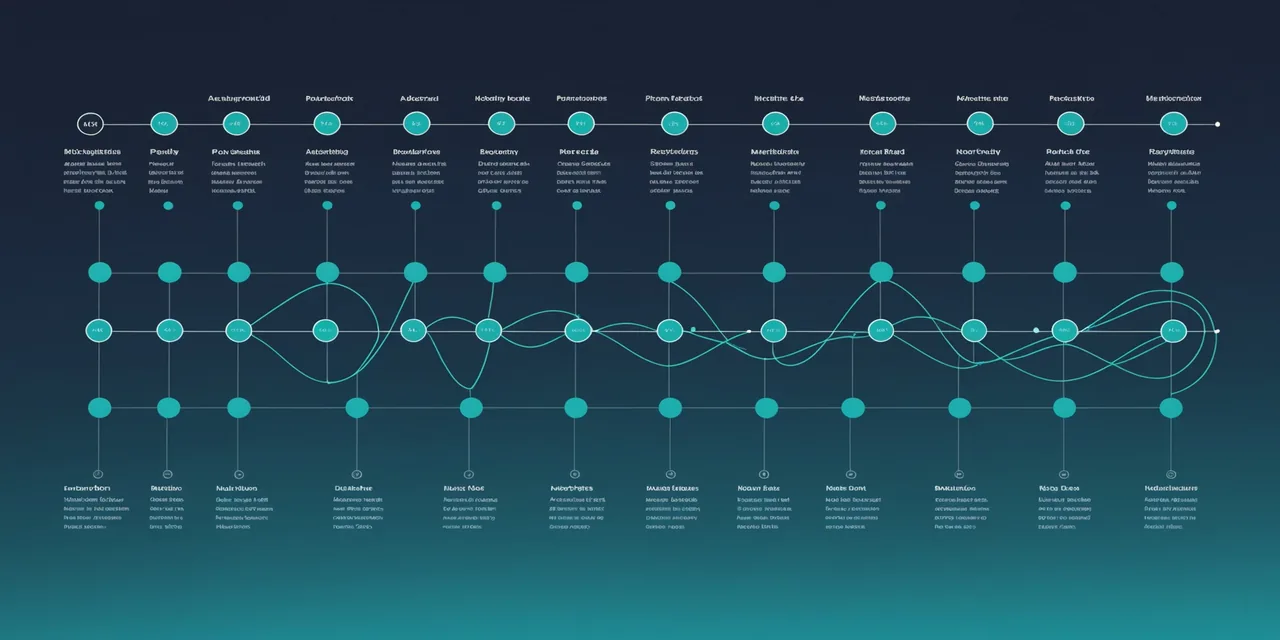
The Corporate Sustainability Reporting Directive is not a single deadline — it is a rolling obligation that enters force for different categories of companies across three waves between 2025 and 2029. Understanding exactly which wave applies to your organisation, and what the preparation window looks like, is the first step in building a compliance plan that does not end in a last-minute restatement.
This article maps the filing waves, the company size thresholds, and the practical preparation timelines that enterprises need to work backward from their mandatory filing date. Note that as of early 2026, the EU Omnibus package is moving through legislative process and may adjust some thresholds — we have noted where proposed changes are material, but enterprises should verify the current state of any amendments affecting their specific situation.
The Three Waves: Who Files When
CSRD implements mandatory sustainability reporting in phased waves, aligned with company size and listing status. Here is the current framework:
| Wave | Company type | First reporting year | First publication deadline |
|---|---|---|---|
| Wave 1 | Large public-interest entities already under NFRD (>500 employees) | FY2024 | 2025 (during annual report filing period) |
| Wave 2 | Large companies not previously under NFRD (>250 employees OR >€40M turnover OR >€20M balance sheet total, where at least 2 of 3 criteria are met) | FY2025 | 2026 |
| Wave 3 | Listed SMEs (with opt-out until 2028), small non-complex credit institutions, captive insurance undertakings | FY2026 | 2027 |
Wave 2 is where the largest number of enterprises are concentrated. An estimated 50,000 companies across the EU fall into the Wave 2 category — roughly 10 times the Wave 1 cohort. Many of these organisations have not previously prepared sustainability reports with the rigour CSRD demands, which makes the FY2025 filing window (reporting in 2026) the critical point of pressure in the current cycle.
What "First Reporting Year" Actually Means
The phrase "first reporting year FY2025" means your CSRD sustainability statement must cover the financial year ending 31 December 2025 (for calendar-year companies). It must be published as part of — or alongside — your annual management report, which for most EU-listed entities is due within four months of financial year-end: by the end of April 2026.
That is not very much time. Four months from year-end to published sustainability statement, including limited assurance review. Enterprise teams that begin CSRD preparation in January 2026 for a FY2025 filing will almost certainly not produce a full ESRS E1 disclosure on the first attempt. They will either miss the deadline, file with material gaps, or face a costly last-minute acceleration.
Preparation for a FY2025 filing should have started no later than mid-2024 — ideally earlier for the Scope 3 data collection component, which requires a full 12-month data set plus supplier engagement time. If you are reading this in early 2026 as a Wave 2 filer, the situation is urgent but not unrecoverable — but it requires triage.
"We see the same pattern every CSRD wave: enterprises assume the preparation window is shorter than it is. For Scope 3, 12 months is the minimum viable preparation. 18 months is comfortable. Start counting backward from your filing deadline." — Annika Lindqvist, CEO, Carbonkindle
Preparation Windows by Component
Not all CSRD preparation tasks have the same lead time. Governance and narrative disclosures can be drafted relatively quickly by the right team. GHG emissions data collection — particularly Scope 3 — requires time that cannot be compressed. Here is a realistic view of preparation windows by disclosure component:
| CSRD component | Minimum preparation window | Notes |
|---|---|---|
| Double materiality assessment | 2–4 months | Requires stakeholder input and board sign-off; cannot be rushed |
| Scope 1 and 2 inventory | 1–3 months | Depends on ERP data availability; can be accelerated with structured data extraction |
| Scope 3 inventory (spend-based) | 2–4 months | Requires procurement data extraction, EEIO mapping, and category-level review |
| Scope 3 (primary supplier data) | 6–12 months | Supplier engagement cycles, response follow-up, and data validation all take time |
| ESRS E1 narrative disclosure | 2–3 months | Transition plan section requires leadership input and potentially external review |
| Limited assurance review | 4–8 weeks | Assurance providers are heavily booked in the January–April window; secure a slot early |
The critical path item is supplier data collection for Scope 3. It cannot be accelerated past a certain point because it depends on external parties — suppliers — who have their own timelines. If you are in a high-Scope-3 industry (manufacturing, retail, distribution), the supplier engagement process needs to start at least nine months before your filing deadline.
The Omnibus Package: What May Change
In early 2026, the European Commission introduced the Omnibus package, which includes proposed amendments to CSRD that would raise the company size thresholds and potentially defer mandatory reporting for some Wave 2 and Wave 3 companies. The proposed changes include raising the employee threshold for mandatory reporting from 250 to 1,000 employees for non-PIE companies, which would significantly reduce the number of companies in scope.
As of the publication date of this article, the Omnibus amendments have not been adopted into law. Enterprises should not plan their CSRD preparation on the assumption that the amendments will pass in their proposed form or on the proposed timeline. The practical advice: if you are currently in scope under the existing CSRD thresholds, proceed with preparation while monitoring the legislative process. If the amendments narrow your scope, you can scale back. If they do not, you will not be caught without a disclosure.
US Multinationals With EU Operations
US-headquartered companies with EU subsidiaries, branches, or significant EU operations face CSRD obligations through a different route: the third-country rules. A non-EU parent company is subject to CSRD reporting for its EU subsidiary if the subsidiary meets the relevant size thresholds independently. The subsidiary's disclosure obligations follow the same Wave schedule as comparable EU companies.
Additionally, large third-country companies with EU-listed securities or significant EU-generated net turnover (above €150M per year for two consecutive years) face CSRD requirements for their EU operations starting FY2028. This is beyond the 2025–2027 window discussed here, but US multinationals building enterprise sustainability data infrastructure now should design it to accommodate this requirement from the start.
Building Your CSRD Preparation Calendar
Regardless of which wave applies to your organisation, the preparation calendar follows the same backward-planning logic. Start from your filing deadline. Subtract 6–8 weeks for assurance review. That is the date by which your complete ESRS sustainability statement — all sections, all data — must be in draft form. Work backward from there to assign preparation milestones for each disclosure component.
Wave 2 filers with a filing deadline of April 2026 are already in the red zone. Wave 3 filers with a FY2026 deadline have roughly 12 months from now to get their data infrastructure in place. That is enough time — but only if they start now.
Related Insights